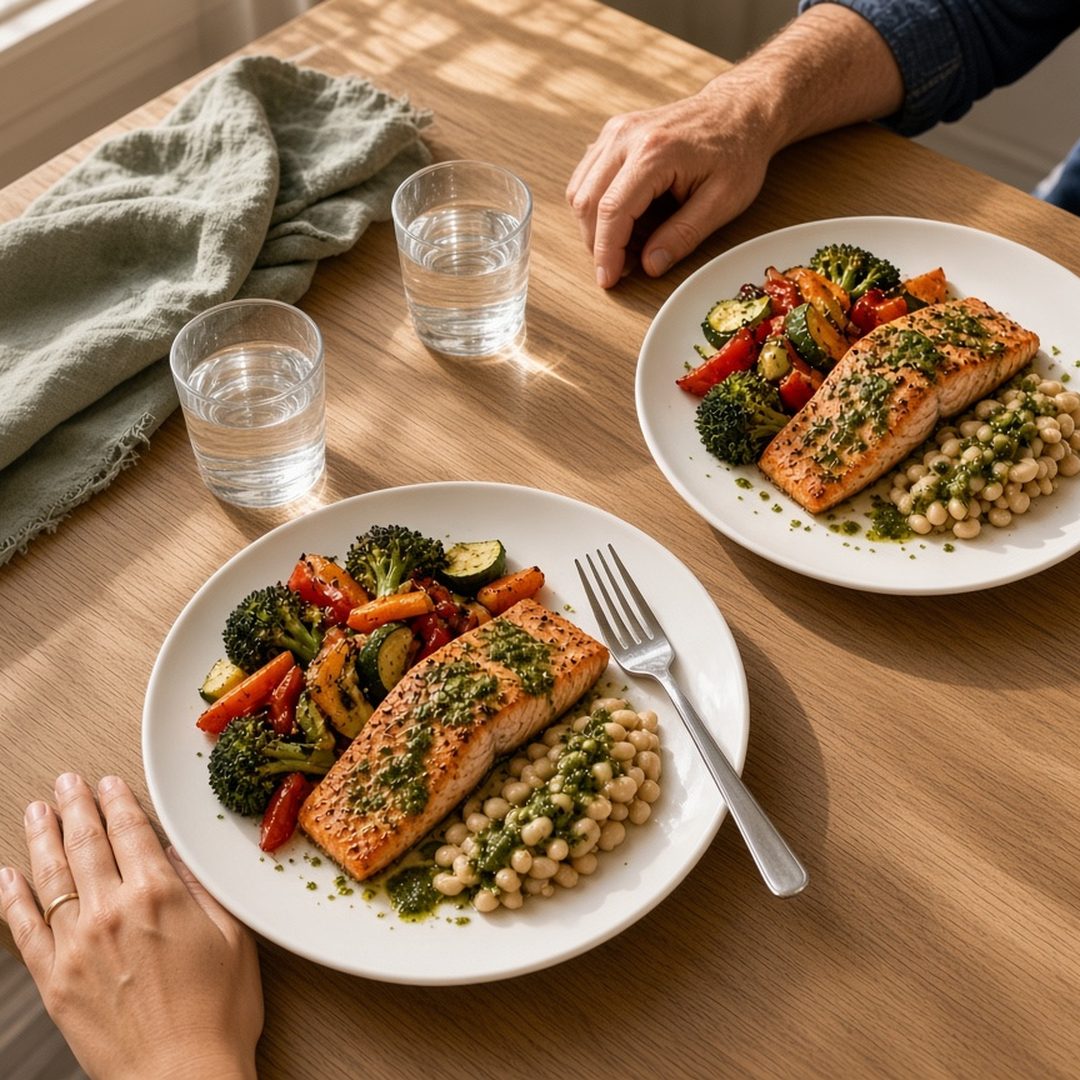
It's 5:45. You've worked, driven, answered everyone's questions, and somebody is asking what's for dinner. Maybe that somebody is you.
This is the moment where all the good intentions from the last few weeks either turn into a plate or turn into a sleeve of crackers and a "we'll do better tomorrow."
I don't think the answer is a better recipe. I think it's a simpler question. Instead of "What should I make?" try "What's my protein, what's my plant, and what's my slow carb?" That's it. That's the whole plate.
One of my favorite easy dinners is barely a recipe. I grab a packet of rice that steams in the microwave in two minutes (brown or white, whichever you like), a can of green beans and a can of mushrooms (both drained), and some cooked ground turkey. It all goes in one bowl with a dash of soy sauce. Protein, plants, a carb (brown rice adds a little more fiber), a little flavor. Quick, and it covers the whole plate.
Why dinner is where the series comes together
If you've been reading along, you already know most of this. Dinner just puts it in one place, and a dinner you can count on is one less decision at the end of a long day:
- The 3pm crash post: a plate with some protein, some fiber, and a slower carb keeps the ride gentler than a plate of mostly starch.
- The protein post: dinner is an easy place to land a good, steady serving of protein, especially if lunch came up short.
- The sleep post: what you eat in the evening matters for the night ahead. In a 2026 study that paired thousands of nights of real-life diet logs with wearable sleep tracking, days with more fiber were linked with a little more deep and REM sleep, and a wider variety of plants with a lower heart rate overnight. Heavier evening meals were linked with slightly longer sleep but a higher overnight heart rate.1 That's a link, not a rule. But it's a nice nudge toward a lighter, plant-full dinner.
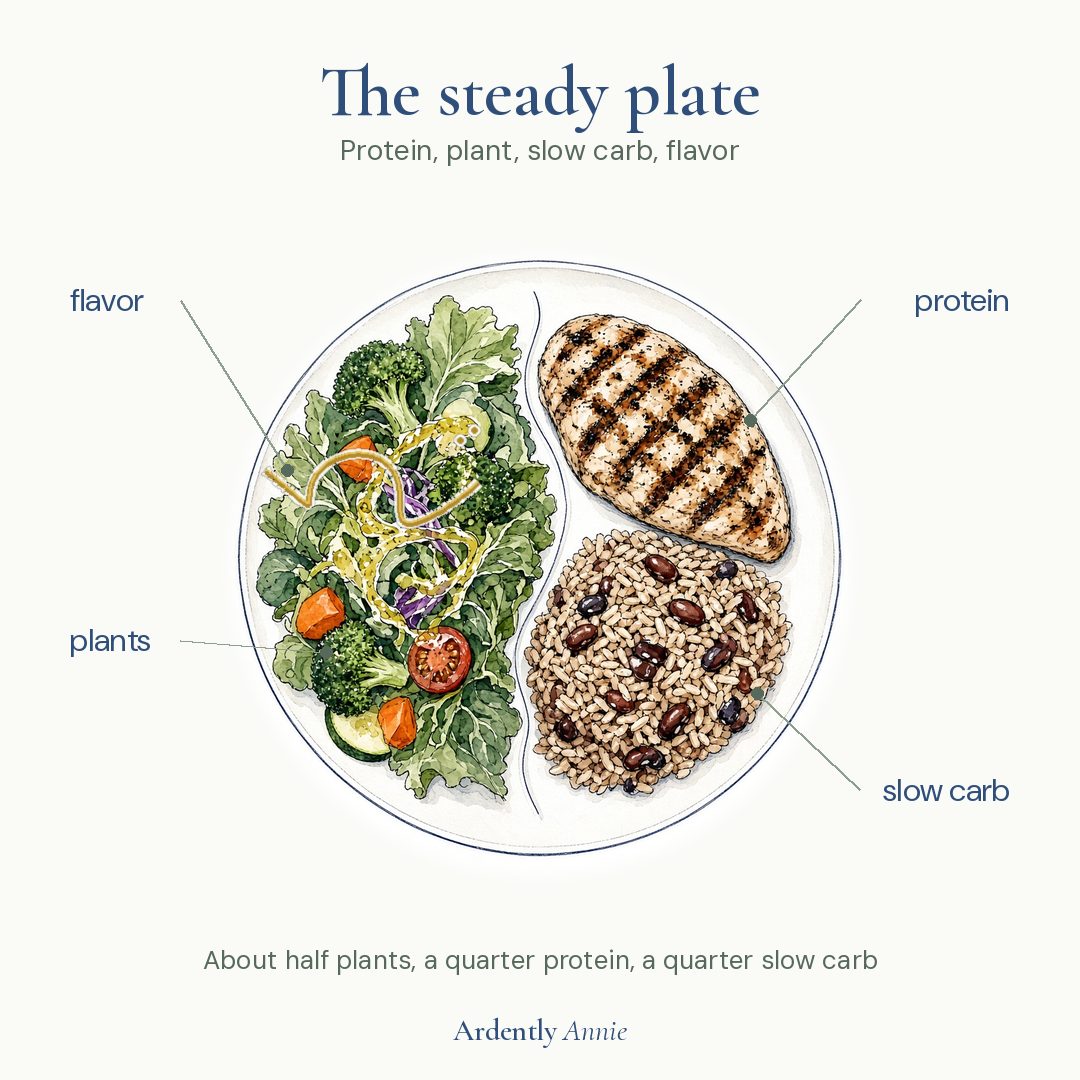
The steady plate, in four parts
Protein (about a quarter of the plate). Chicken, fish, eggs, beans or lentils, tofu, Greek yogurt in a sauce, a rotisserie chicken from the store. It doesn't need to be weighed. A palm-ish portion is a fine place to start.
Plants (about half the plate). Vegetables you'll actually eat, raw or cooked, fresh or frozen. A bagged salad counts. Frozen green beans count. Last night's roasted vegetables count. This is where most of your fiber lives.
Slow carb (about a quarter). Beans, lentils, brown rice, farro, whole-grain bread, or a small potato or sweet potato with the skin on. These carry fiber with them, which is part of what makes them "slow."
Flavor (a drizzle, a squeeze, a sprinkle). Olive oil, a squeeze of lemon, a spoonful of a good dressing, some herbs, a little feta or Parmesan. Flavor is not optional. A plate you enjoy is a plate you'll make again.
This is what clean eating looks like in my kitchen: real food (cans and packets included), simple steps, nothing fussy.
A word on "processed" food
You may have seen a lot of fear lately about anything that comes in a package. Here's a bit of good news from a new analysis of more than 460,000 older US adults: the "ultra-processed" label on its own didn't tell the whole story about bowel cancer risk. What was in the food seemed to matter more. Whole grains, fiber, dairy, and calcium were linked with lower risk, even when they came from packaged foods, while processed meats were linked with higher risk.2
It's one observational study, and it can't prove cause and effect. But it matches what I'd tell you anyway: a rotisserie chicken, a bag of frozen vegetables, a can of beans, and a box of whole-grain pasta are not failures. They're how real people eat dinner on a Tuesday. If you want to make one swap, choosing less processed meat (like deli meat, hot dogs, and sausage) is a good place to start.
On fiber, without the "maxxing"
"Fibermaxxing" is everywhere right now, and honestly, the heart of it is good. Most Americans don't get close to the recommended amount of fiber.3 But more isn't endlessly better. The benefits seen in research come from reaching the usual targets, and adding a lot of fiber fast can leave you bloated and uncomfortable.3,4
So I'd skip the gram counting. Just add one more plant to dinner this week: a handful of spinach in the pan, a can of chickpeas in the salad, an extra vegetable on the sheet pan. Go slowly, and drink some water with it.
If you live with a digestive condition, like IBS or inflammatory bowel disease, please check with your clinician before eating more fiber. What's gentle for one gut isn't for every gut.
Three small steps
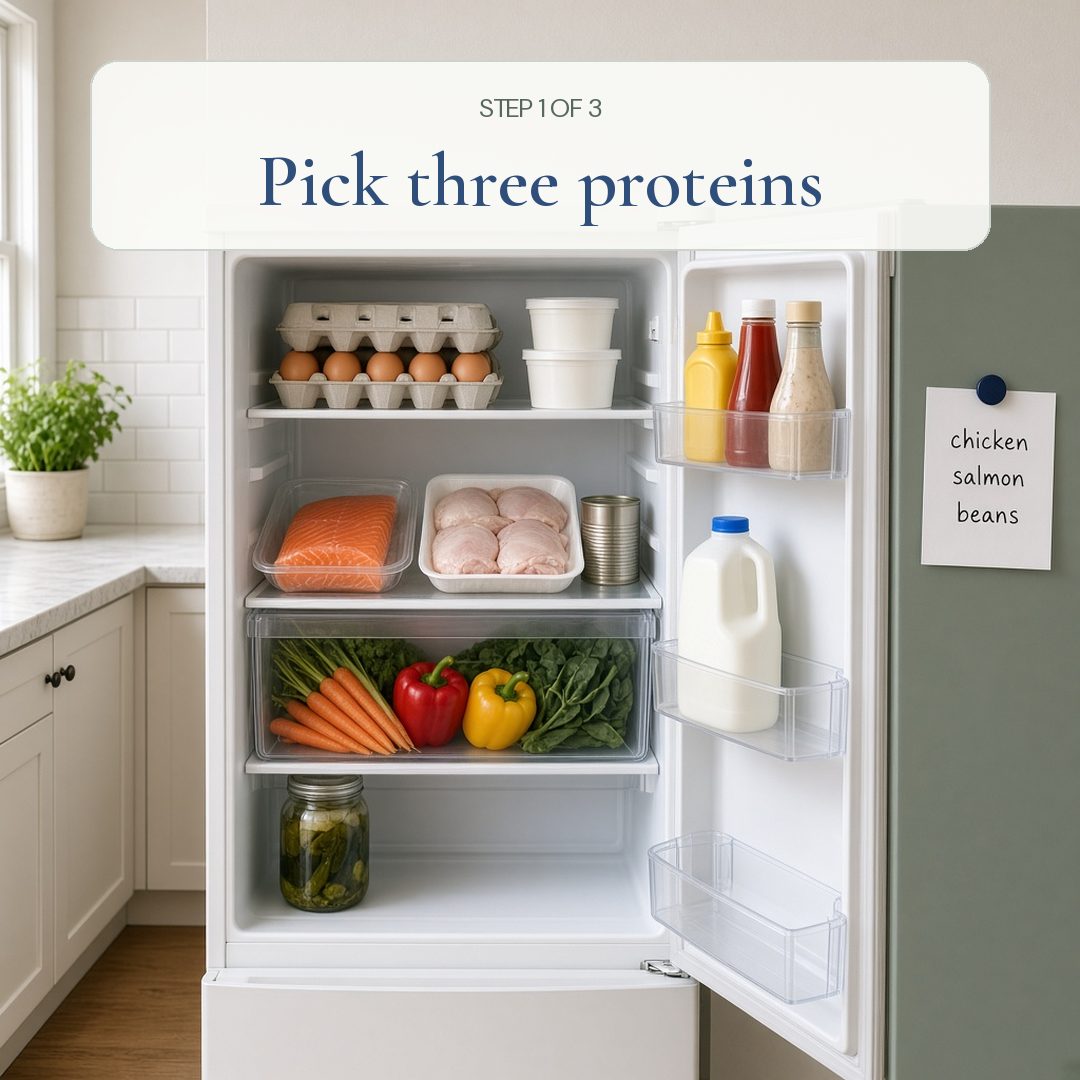
1. Pick three proteins for the week. Not seven dinners. Just three proteins you'll have on hand, like chicken thighs, a piece of salmon, and a can of beans. Deciding that once on the weekend takes most of the 5:45 panic out of the week.
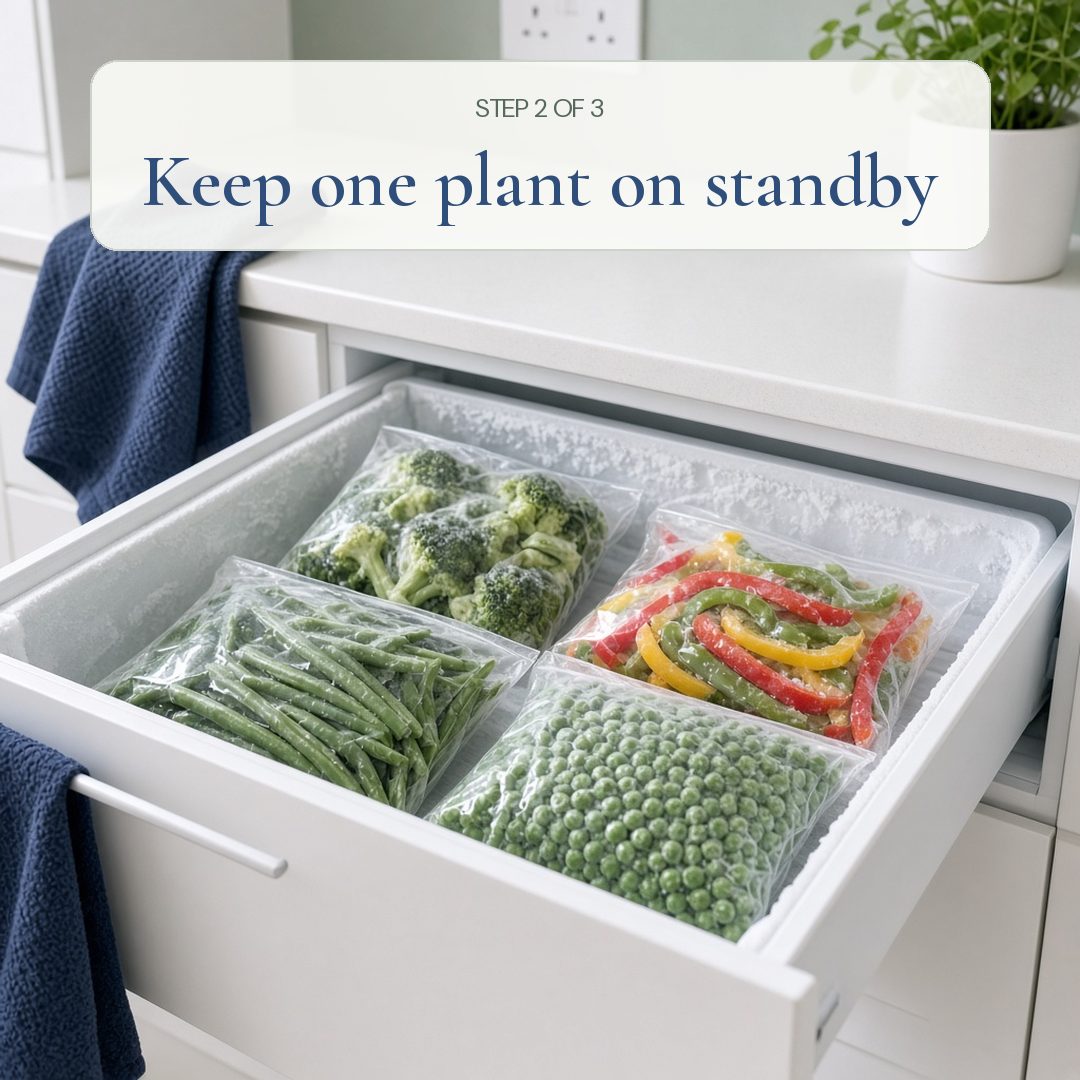
2. Keep one plant on standby. A bag of frozen vegetables, a bag of greens, or a pre-cut vegetable you like. When dinner comes together fast, the plant is usually what gets left out, so make it the easy part.
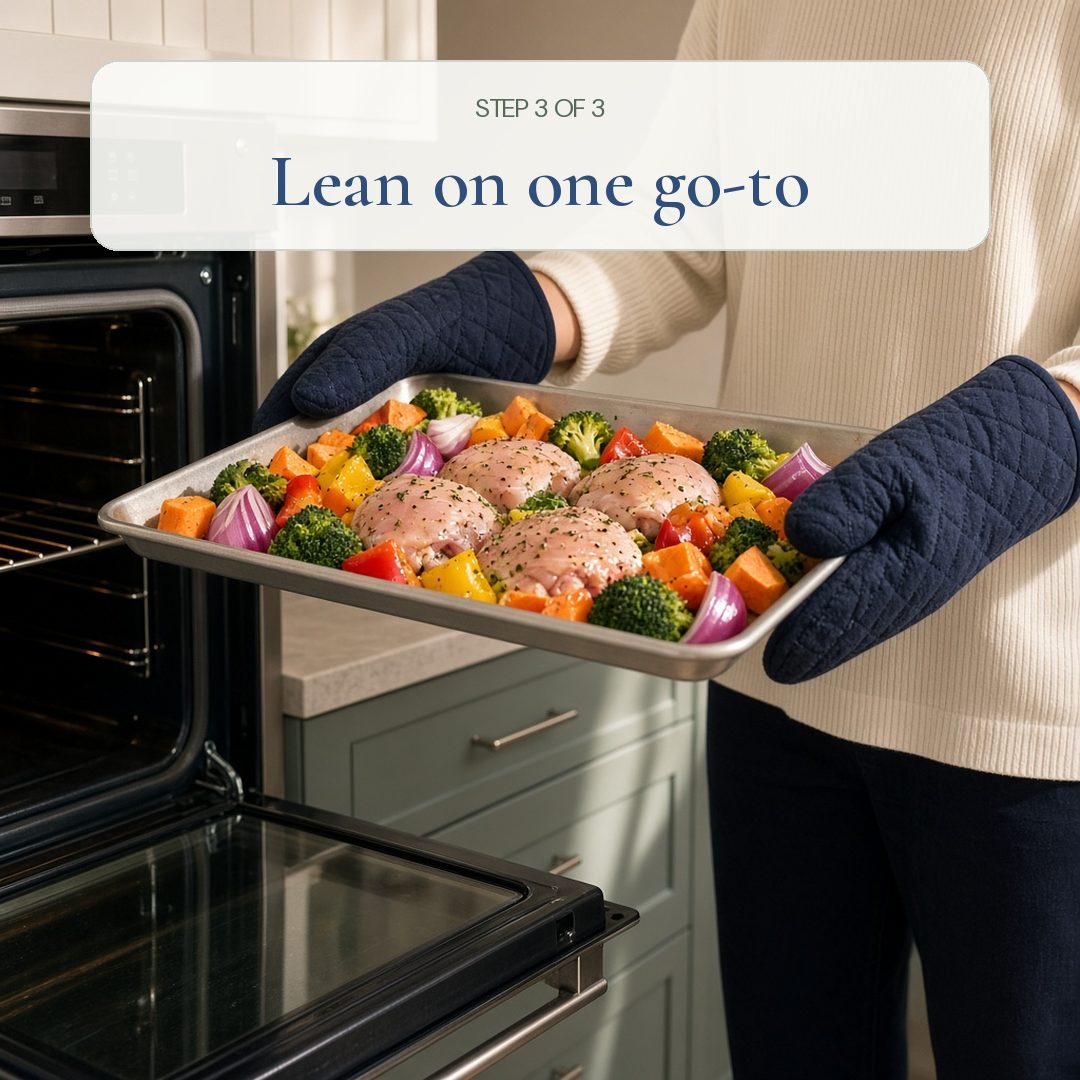
3. Lean on one go-to. Every busy household needs a dinner it can make without thinking. If you don't have one yet, here are a few from the Recipes page that follow the steady plate:
- Sheet-Pan Chicken & Rainbow Veg
- Salmon & Greens Skillet
- Lentil Soup with Olive Oil Finish
- Ground Chicken Stir Fry
Pick one this week. Begin where you are.
What I'd skip
I'd skip anything that turns dinner into a test. That means "what I eat in a day" videos that make you feel behind, fiber challenges that count every gram, and meal-replacement shakes standing in for a plate on most nights. They aren't wrong for everyone. They're just not where I'd start.
And if you're working with a doctor on a specific condition, or you take a medication that affects your appetite (including GLP-1 medications), your care team's guidance comes first. The steady plate is a starting point, not a prescription.
When to loop in a professional
If eating feels stressful, restrictive, or tangled up with guilt, or if you have ongoing digestive symptoms, unexplained weight changes, or a medical condition that shapes what you can eat, please talk with your clinician or a registered dietitian. Coaching supports habits and routines. It doesn't replace medical care.
What's next on the blog
Steadier Energy path:
- Why energy crashes by 3pm
- Protein without the bro-culture noise
- Sleep isn't a productivity hack
- This week: The steady weeknight plate (you are here)
- Coming next: Strong enough to catch yourself
Sources
- Shkolnik M, Sapir G, Shilo S, Talmor-Barkan Y, Segal E, Rossman H. Impact of daily diet on sleep quality. Nature Health. 2026. https://doi.org/10.1038/s44360-026-00182-2
- Abar L, O'Connell CP, Hong HG, et al. Associations of food processing and dietary risk factors with colorectal cancer incidence in the NIH-AARP Diet and Health Study: a cohort study. PLOS Medicine. 2026. https://doi.org/10.1371/journal.pmed.1005251
- US Department of Agriculture and US Department of Health and Human Services. Dietary Guidelines for Americans, 2020–2025, 9th edition (p. 101). 2020. https://www.dietaryguidelines.gov/sites/default/files/2020-12/Dietary_Guidelines_for_Americans_2020-2025.pdf
- Cancer Research UK. Fibremaxxing, sleepmaxxing: can "maxxing" help prevent cancer? Cancer Research UK News. 2026. https://news.cancerresearchuk.org/2026/10/16/fibremaxxing-sleepmaxxing-can-maxxing-help-prevent-cancer/
Want more like this? Get the free guide.
Annie is a National Board Certified Health & Wellness Coach (NBC-HWC) and Functional Nutrition Alliance Certified Functional Nutrition Counselor (CFNC). She is not a registered dietitian or licensed nutritionist, and her coaching doesn't diagnose, treat or prescribe. This post is for education and coaching support, not medical advice. Always check with your own clinician for personal health decisions.