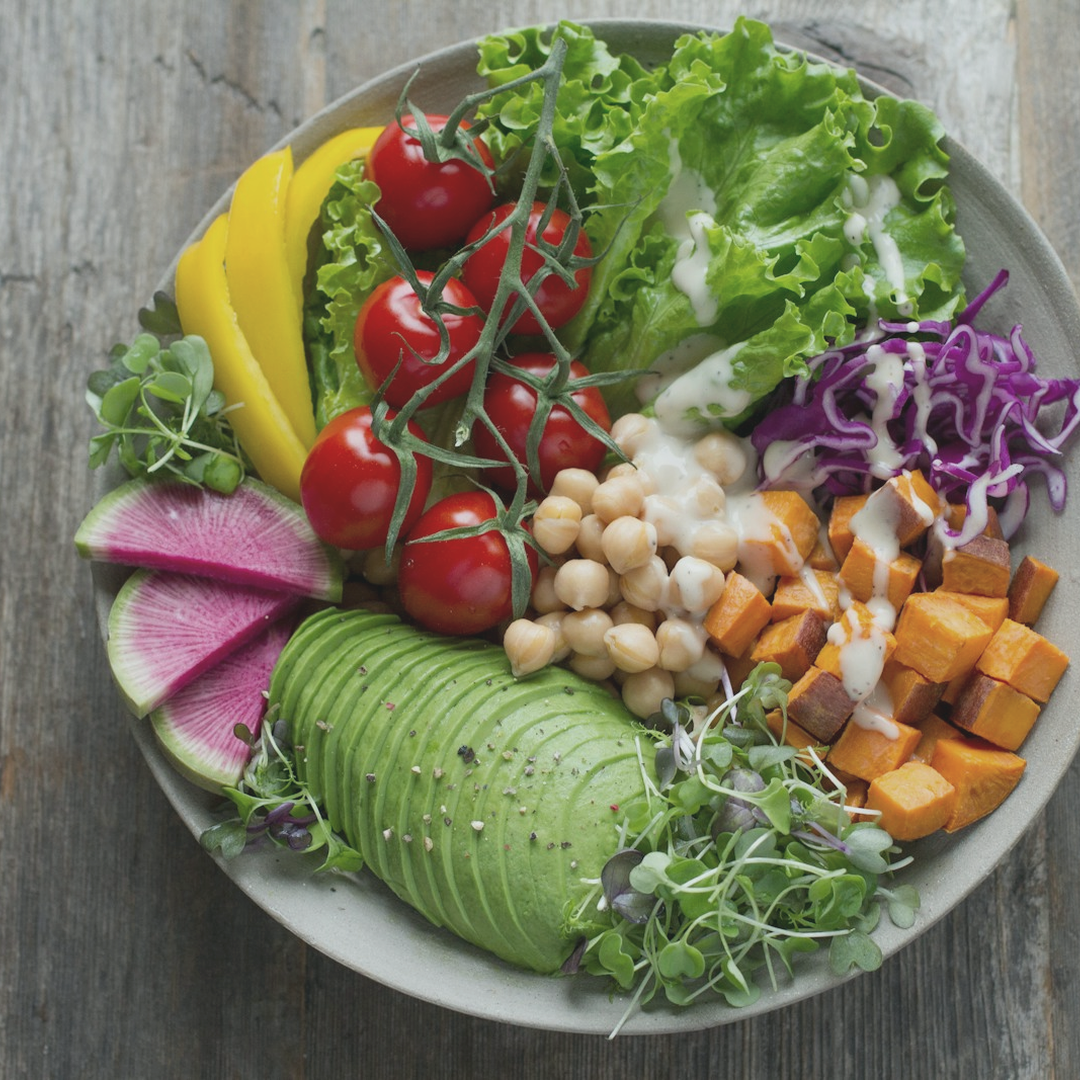
You know the pattern. Morning starts fine — coffee, emails, maybe even a decent breakfast — and by mid-afternoon you're foggy, snacky, and wondering if something is “wrong” with you.
Often nothing dramatic is wrong. Your body is asking for steadier fuel, not a harder push.
This is the first post in a series on real-food energy: how blood sugar, protein, stress, and sleep talk to each other — and what small, doable shifts look like when you're a busy woman who doesn't want another extreme protocol.
The short version
Afternoon crashes usually aren't a character flaw. They're a signal that glucose and stress hormones have been on a roller coaster — often from skipping protein, long gaps between meals, all-or-nothing “clean eating,” or a nervous system that's been “on” since 7 a.m.
You don't need a biohacking stack to feel better. You need a plate and a pace that match real life.
What's going on under the hood
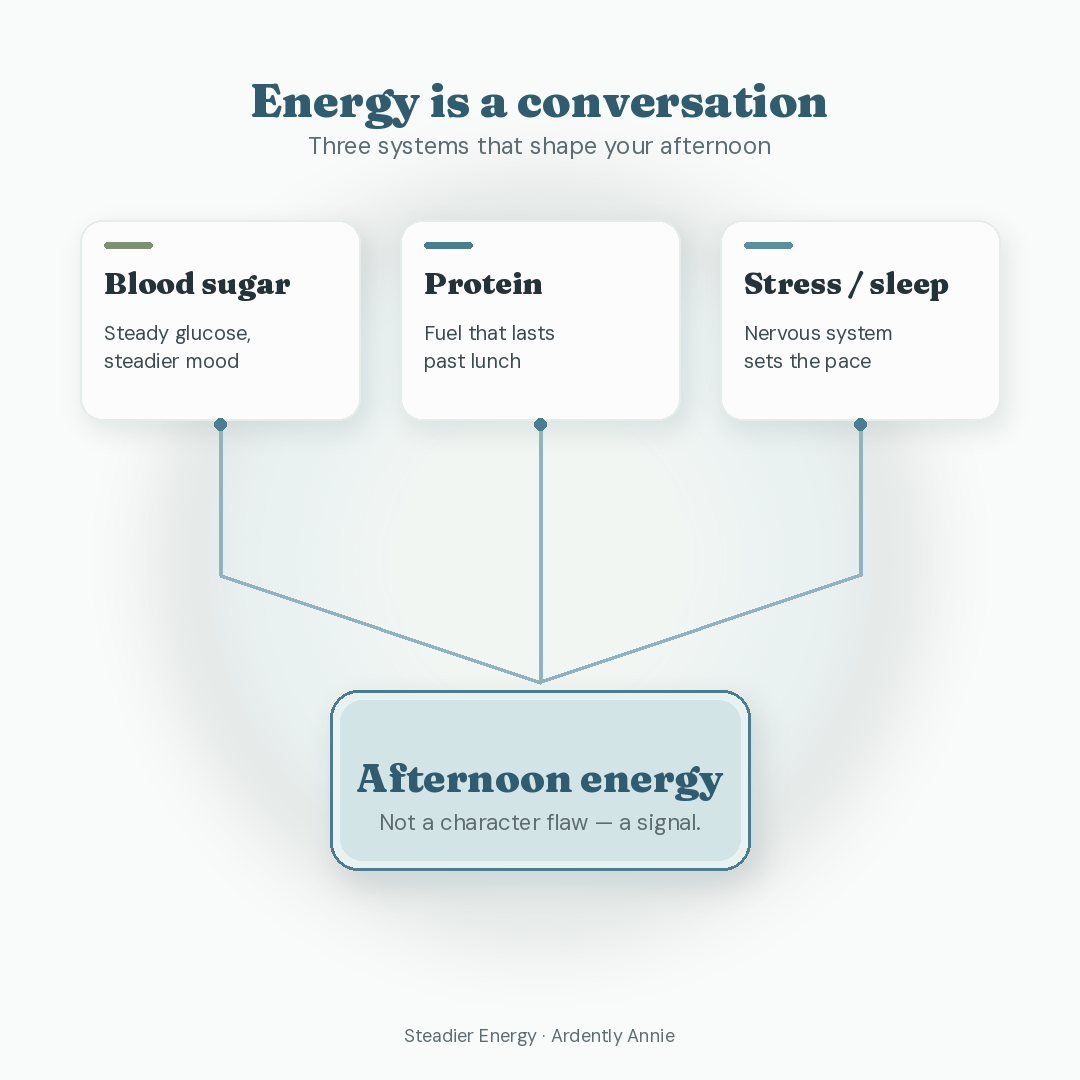
Think of energy as a conversation between a few systems:
Blood sugar. When a meal is mostly refined carbs and little protein or fat, glucose can rise fast and fall just as fast. The “fall” feels like fatigue, irritability, and a pull toward sugar or caffeine.
Protein and muscle. Midlife especially, protein isn't a gym trend — it helps satiety, steadies the afternoon, and supports the muscle that keeps metabolism resilient. Skip the all-or-nothing rules — just aim for enough protein across the day. We can worry about the rest later.
Stress and sleep. Cortisol and poor sleep make blood sugar harder to manage. That 3pm crash can be yesterday's late night wearing today's outfit.
Gut and inflammation. Bloating, irregular digestion, and inflammatory load can quietly drain energy even when labs look “normal.” Feeling off with “fine” labs is common — and worth curious, compassionate attention with a clinician when symptoms persist.
None of this is a diagnosis. It's a map for asking better questions.
What longevity culture gets right (and what to skip)
You'll hear a lot right now about CGMs, fasting windows, zone-2, creatine, and “optimizing.” Some of the foundations are solid: sleep, strength, protein-forward plates, walking after meals.
The part that doesn't fit Ardently Annie: fear marketing, 50-pill stacks, and treating your body like a dashboard to hack.
We're translating the useful bits into kitchen-and-life language — not clinic theater.
Three small steps that actually move the needle
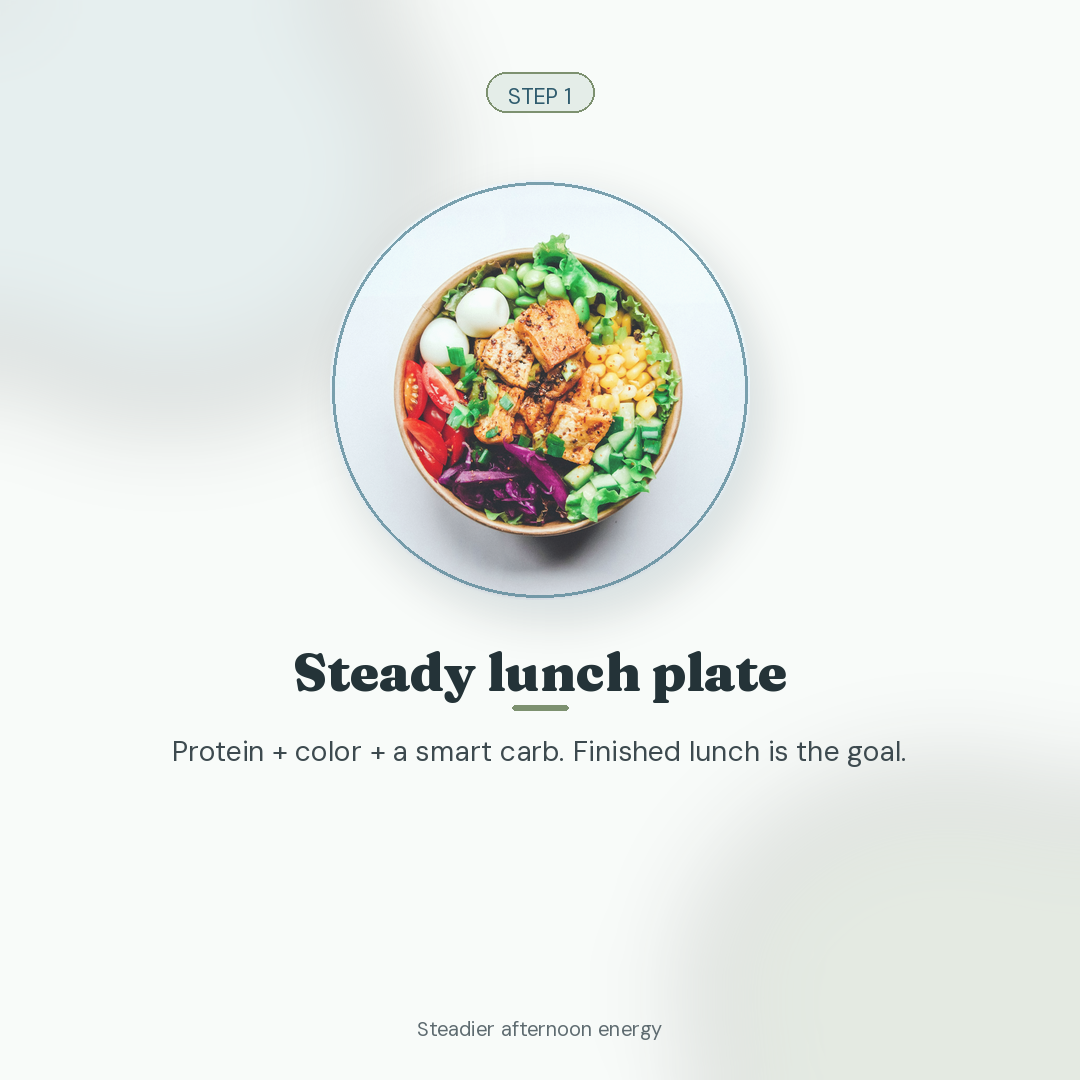
1. Build one “steady plate” at lunch.
Aim for protein you enjoy + colorful plants + a smart carb + a little fat. Examples: leftover chicken and roasted veggies with rice; Greek yogurt bowl with berries, nuts, and a drizzle of honey; lentil soup with olive oil and a side of fruit. Perfect is not the goal. Finished lunch is.
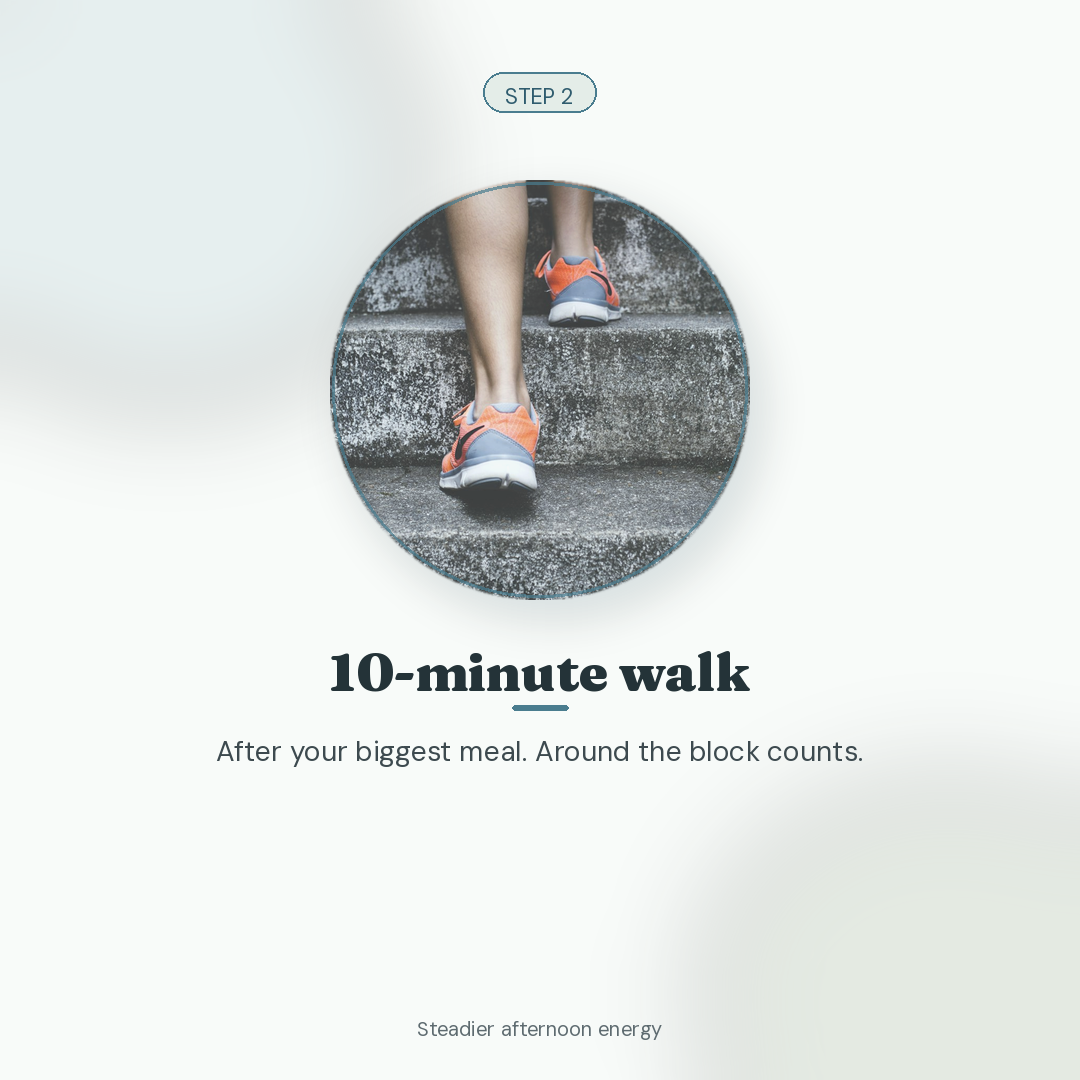
2. Take a 10-minute walk after your biggest meal.
Post-meal movement is one of the gentlest ways to flatten the afternoon dip. No workout clothes required. Around the block counts.
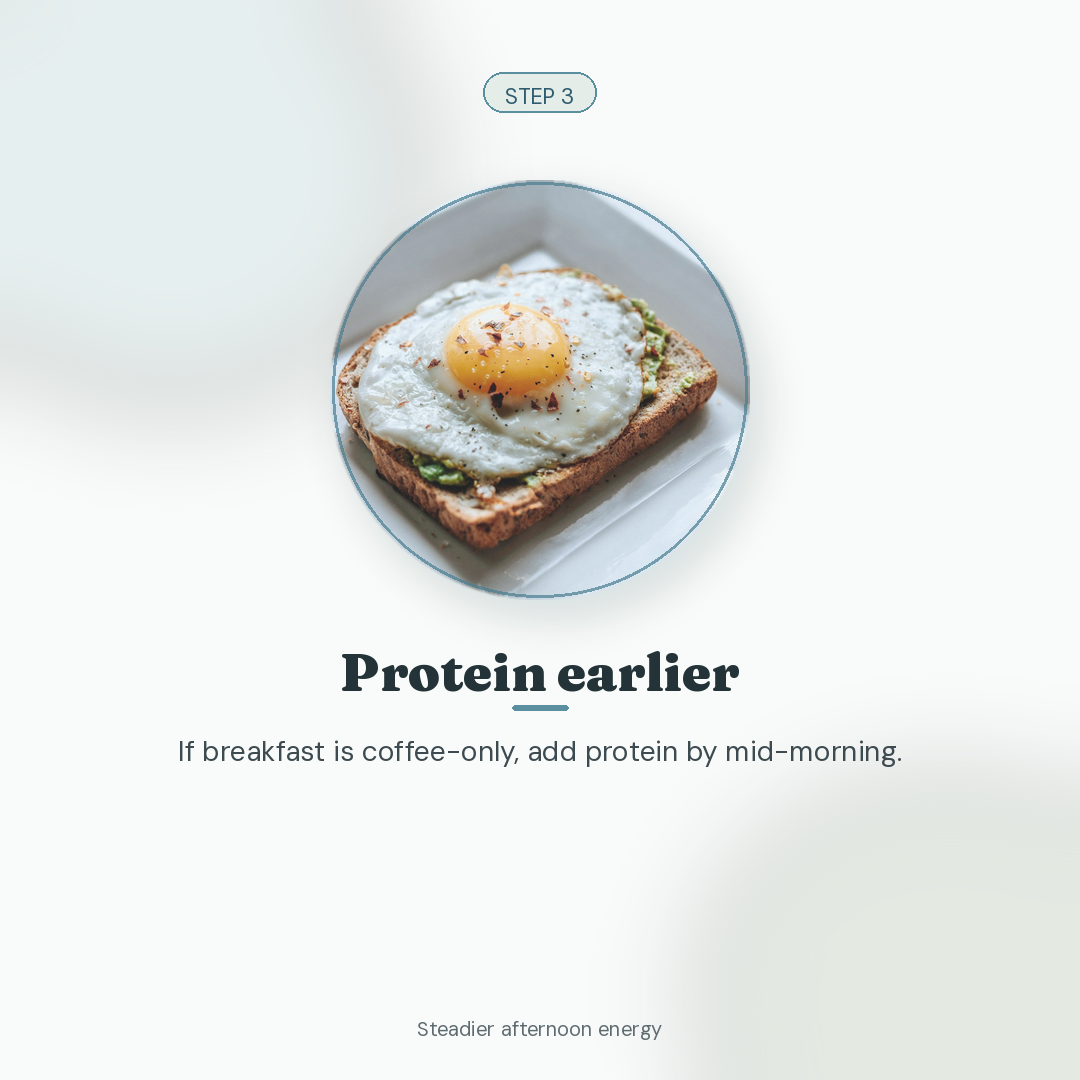
3. Front-load protein earlier.
If breakfast is coffee-only, try adding something with protein by mid-morning at the latest — eggs, a smoothie with protein, cottage cheese, leftover dinner. Many women feel the 3pm crash ease when the morning isn't running on fumes.
Pick one this week. Begin where you are.
When to loop in a professional
If energy crashes come with unexplained weight change, heavy periods, hair loss, persistent gut issues, or mood shifts that worry you, talk with your clinician. Coaching supports habits and nourishment; it doesn't replace medical care, labs, or a registered dietitian when you need clinical nutrition.
What's next on the blog
This kicks off our Steadier Energy path:
- This week: Why energy crashes by 3pm (you are here)
- Protein without the bro-culture noise
- Sleep as hormone-and-gut support (not another productivity hack)
- I Tried NMN. Here's What I Think About NAD+ Now.
- A weeknight recipe series that matches these ideas
Guides and recipes will live alongside these posts — same voice, same small steps.
Want more like this? Get the free guide.
Annie is a National Board Certified Health & Wellness Coach (NBC-HWC) and Functional Nutrition Alliance Certified Functional Nutrition Counselor (CFNC). She is not a registered dietitian or licensed nutritionist, and her coaching doesn't diagnose, treat or prescribe. This post is for education and coaching support, not medical advice. Always check with your own clinician for personal health decisions.